
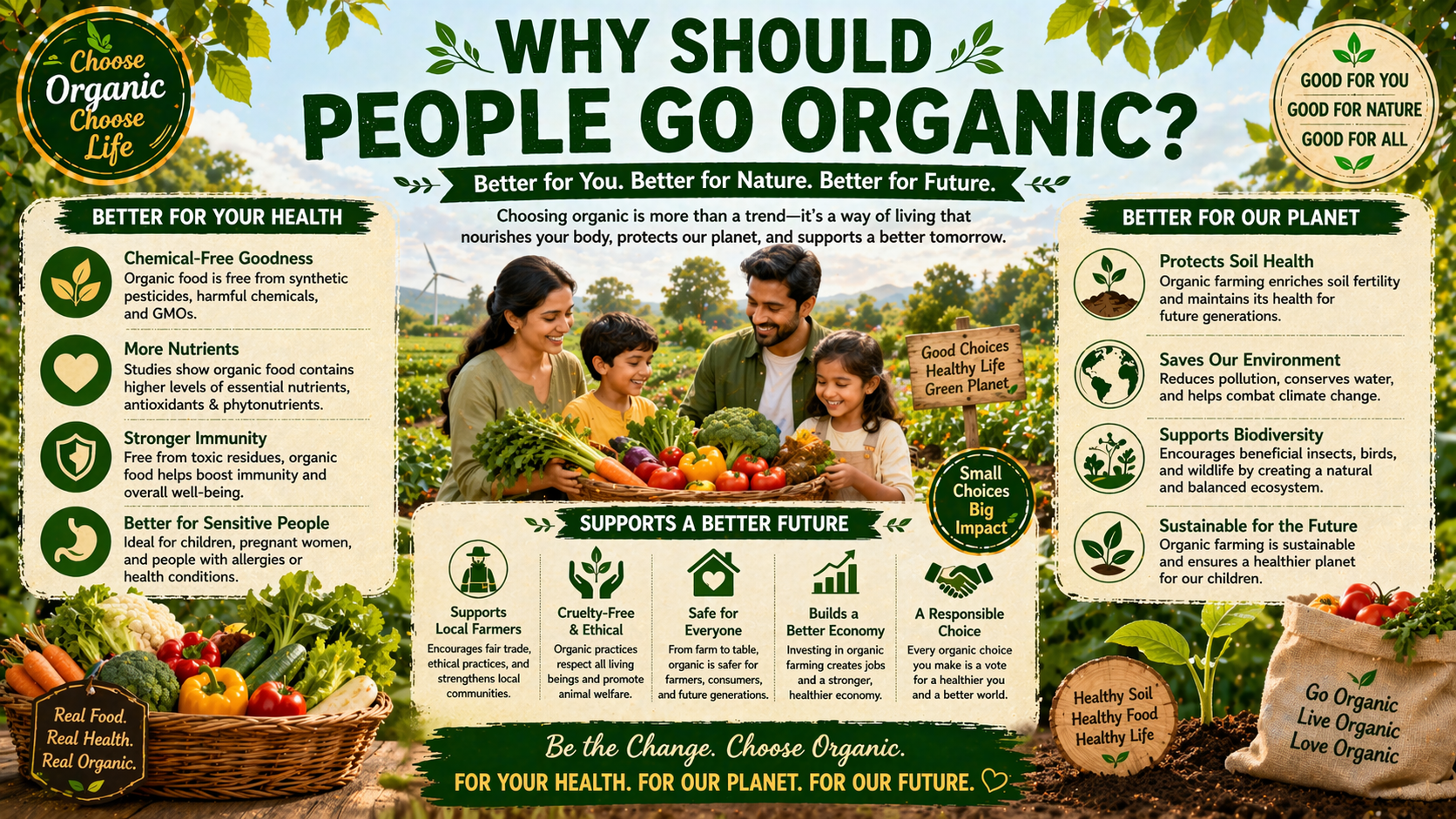
Why Should People Go Organic?
In a world where convenience often comes first, more people are beginning to ask a simple but important question: what exactly am I eating, and how was it grown? That question is one of the main reasons organic foods has become so popular.
Going organic is not just about following a trend. It is about choosing food that feels more natural, more transparent, and more aligned with a healthier way of living. For many households, it is a small change that reflects a much bigger mindset.
What does organic really mean?
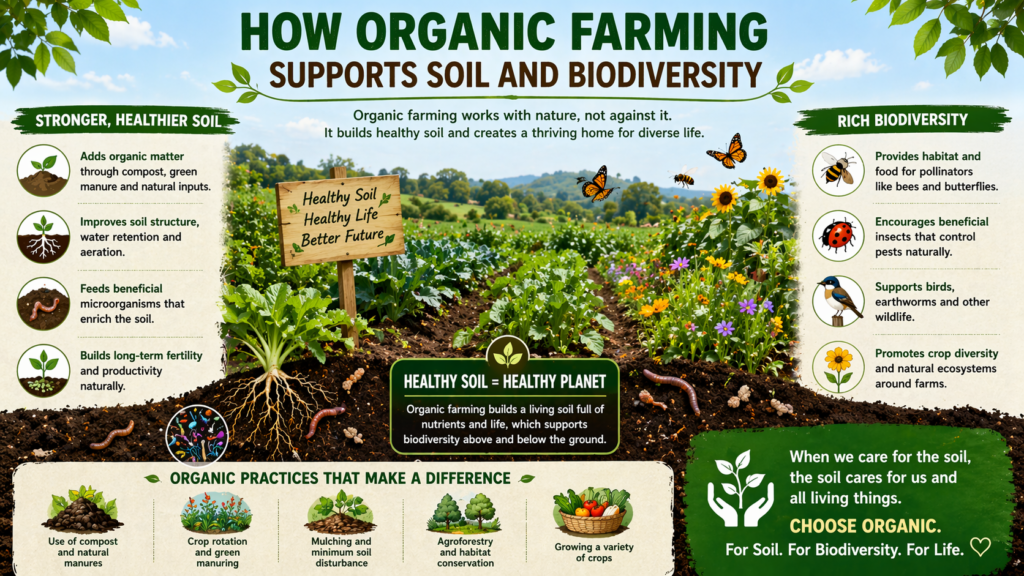
Organic food is grown and processed using methods that avoid most synthetic chemicals, including artificial pesticides, fertilizers, and growth enhancers. Instead, organic farming focuses on natural soil health, biodiversity, and sustainable growing practices.
That means the food is produced with more attention to the balance of the ecosystem. Farmers often rely on crop rotation, compost, natural pest control, and other earth-friendly methods to maintain quality over time.
In simple terms, organic is about working with nature instead of forcing it.
1. It encourages cleaner eating habits
One of the biggest reasons people choose organic is to reduce their exposure to synthetic chemicals in food production. Even if not every product needs to be organic all the time, many people feel more comfortable knowing their staple foods are grown with fewer artificial inputs.
Organic food often appeals to people who want a cleaner, more mindful kitchen. It gives them greater confidence in the ingredients they bring home and serve to their families.
2. It supports better farming practices
Organic farming is not only about the food on your plate. It is also about the land it comes from.
Healthy soil is the foundation of healthy farming. Organic methods help preserve soil structure, improve fertility naturally, and reduce long-term dependence on chemical inputs. This can support farming systems that are more resilient and sustainable.
When people buy organic, they are also supporting agricultural practices that aim to protect farmland for the future.
3. It helps protect biodiversity
Organic farming tends to be gentler on the surrounding environment. By reducing the use of harsh synthetic chemicals, it can create safer conditions for beneficial insects, pollinators, and other forms of wildlife.
This matters because healthy ecosystems are closely connected to healthy food systems. Bees, birds, soil organisms, and plants all play a role in keeping agriculture alive and productive. Organic farming helps preserve that balance.
4. It encourages a more mindful approach to food
Choosing organic often changes the way people think about food. Instead of buying only based on price or convenience, they begin to think about origin, quality, and production methods.
That shift often leads to healthier habits overall. People may start cooking more at home, choosing simpler ingredients, and paying closer attention to what they eat every day. Organic food becomes part of a broader lifestyle that values awareness and quality.
5. It fits well into everyday cooking
One of the best things about going organic is that it does not have to be complicated. You do not need a special menu or advanced cooking skills to use organic ingredients.
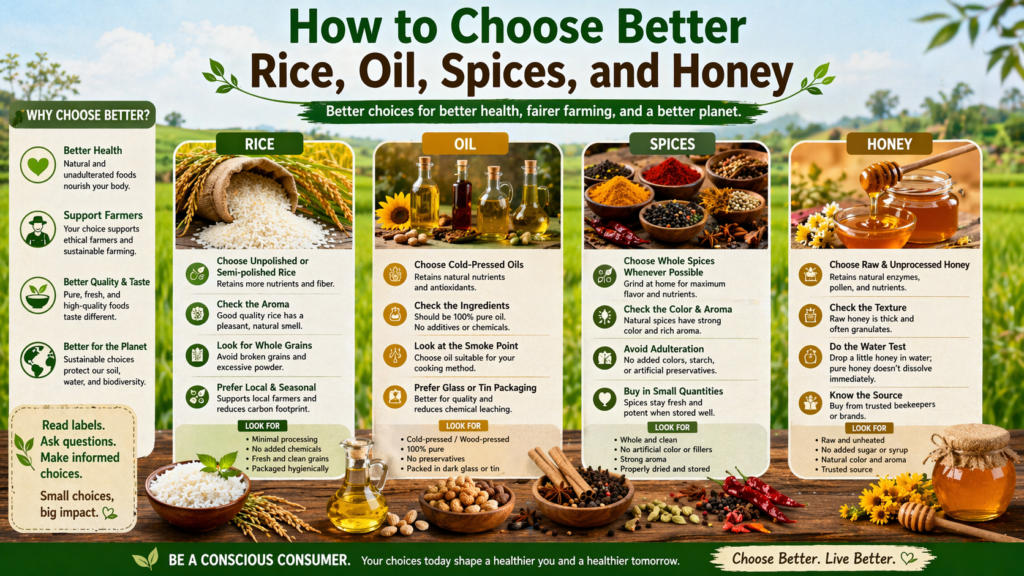
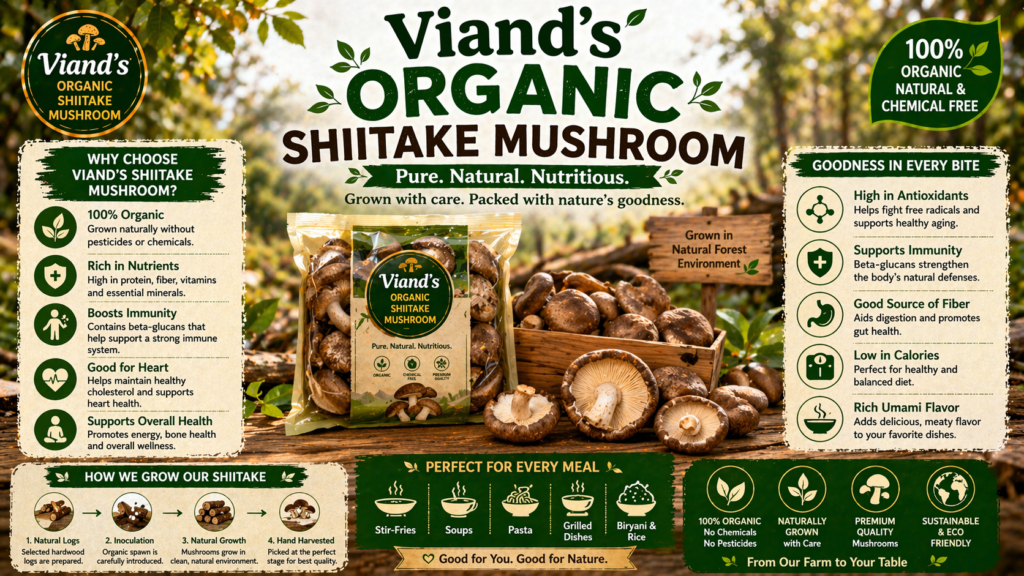
Organic rice, spices, pulses, mushrooms, oils, and sweeteners can easily become part of everyday meals. A simple bowl of rice, a vegetable stir-fry, a lentil dish, or a homemade dressing can all benefit from ingredients that feel more natural and thoughtfully sourced.
Organic cooking is often about simplicity. The less unnecessary processing, the more the real flavour of the food can shine through.
6. It can feel more trustworthy
People today want to know more about where their food comes from. Organic products often come with clearer standards and greater transparency, which can help customers feel more confident in their choices.
That sense of trust matters. When shoppers know a brand values responsible sourcing and careful handling, they are more likely to make it part of their regular routine.
7. It supports a long-term lifestyle, not just a short-term diet
Going organic is not usually about one meal or one product. For many people, it becomes a steady lifestyle choice. It fits into a larger goal of living with more balance, eating with more intention, and choosing foods that feel better for daily use.
Even small changes matter. Replacing a few key pantry staples with organic versions can be a practical first step. Over time, those choices add up.
A simple way to begin
You do not need to switch everything at once. A good way to start is by choosing organic versions of the products you use most often. That might include rice, spices, honey, oils, mushrooms, or other everyday kitchen essentials.
Once those become part of your routine, moving toward a more organic pantry often feels natural and easy.
People should go organic because it is more than a food choice. It is a choice about health, responsibility, and the kind of food culture we want to support.
Organic food can encourage cleaner eating, support sustainable farming, protect biodiversity, and help people build a more thoughtful relationship with what they consume. It is a small shift that can make everyday meals feel more intentional and more grounded.
In the end, going organic is not about perfection. It is about making better choices, one ingredient at a time.