
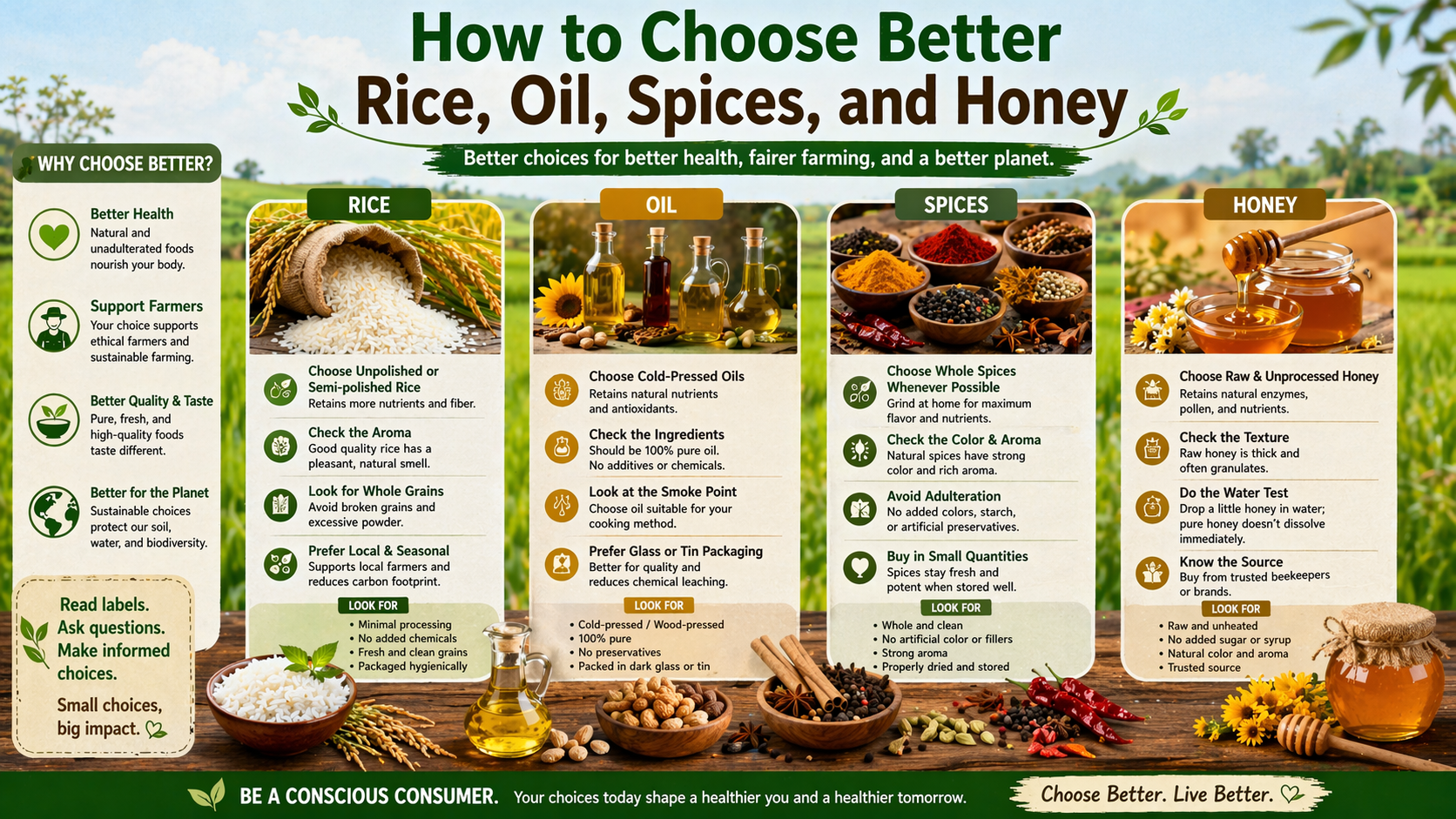
How to Choose Better Rice, Oil, Spices, and Honey
Choosing better ingredients is one of the simplest ways to improve everyday cooking. You do not need complicated recipes or expensive tools to eat well. Often, the real difference comes from the quality of the pantry staples you use every day.
Rice, oil, spices, and honey may seem basic, but they shape the taste, nutrition, aroma, and overall character of a meal. When you choose these carefully, your food becomes fresher, more satisfying, and more balanced.
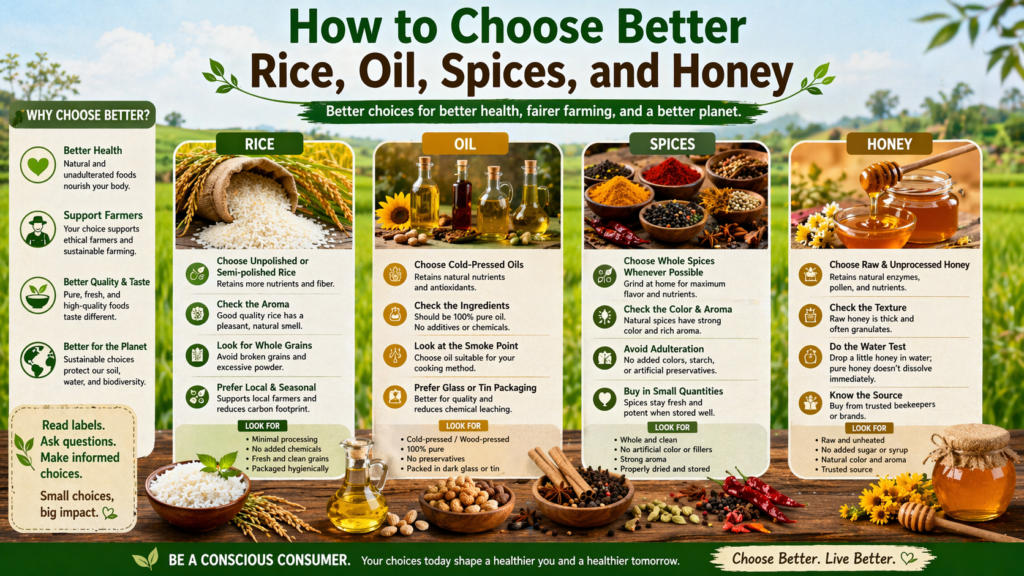
Start with rice: Look for aroma, purity, and texture
Rice is more than just a side dish. For many homes, it is a daily staple. That is why choosing good rice matters.
A better rice usually has a natural aroma, clean grains, and a texture that suits the kind of cooking you do. Some rice varieties are light and fluffy, while others are more fragrant and softer. The best choice depends on whether you want it for simple meals, festive dishes, or everyday comfort food.
What to look for:
- A pleasant natural aroma
- uniform, clean grains
- No excessive broken pieces
- A variety that suits your cooking style
- Clear sourcing or origin details
If rice is stored well and handled properly, it cooks more evenly and tastes better on its own. That means you can rely less on heavy seasoning and still enjoy a satisfying meal.
Choose oil for freshness, not just price
Cooking oil is used so often that many people forget how important it is. A good oil should support flavour without feeling overly processed or stale.
When choosing oil, pay attention to how it is made. Cold-pressed or minimally processed oils often retain a more natural character and are better suited for people who prefer cleaner pantry staples. Freshness is also important, because oil can lose quality over time if exposed to heat, light, or air.
What to look for:
- Clear sourcing
- Fresh aroma
- Minimal processing
- Proper packaging in a dark or protective bottle
- A taste that fits your cooking
Different oils suit different purposes. Some are better for frying, some for tempering, and some for-finishing dishes. Choosing the right oil for the right use can improve both flavour and balance.
Spices should smell alive
Good spices can transform even the simplest meal. The difference between average and excellent cooking often comes down to freshness.
Spices should smell strong, warm, and natural. If they have very little aroma, they may be old or poorly stored. Whole spices usually last longer than ground ones, which is why many home cooks prefer to buy whole and grind or crush them as needed.
What to look for:
- Strong natural aroma
- Vibrant colour
- Clean, dry texture
- No dampness or clumping
- Whole spices when possible
Spices are not just for heat. They add depth, balance, and identity to food. Choosing better spices means your meals can taste fuller with less effort.
Honey should be real, not overly processed
Honey is often sold in ways that make it hard to tell what is genuine. A better honey should feel natural, smell floral or warm, and taste clean.
Raw or minimally processed honey often has more character than honey that has been heavily heated or blended. Crystallization is not a flaw; in fact, it is often a natural sign that the honey is real. The key is to look for transparency in sourcing and processing.
What to look for:
- Clear origin and batch details
- Natural aroma and flavour
- No added sugar or syrup
- Minimal processing
- A texture that may crystallize over time
Good honey can be used in tea, breakfast foods, dressings, desserts, and simple home remedies. When it is authentic, a little goes a long way.
Read labels with a simple habit
The easiest way to choose better ingredients is to read labels carefully. You do not need to memorize technical terms. Just look for clarity.
A good product usually tells you:
- Where it comes from
- How it is processed
- Whether it has additives
- How it should be stored
- Whether it has batch or certification details
Short ingredient lists are usually easier to trust. If a product tries too hard to sound natural but gives very little actual information, it is worth being cautious.
Trust your senses
Fresh food often gives itself away. Smell, texture, colour, and taste all help you judge quality.
Rice should look clean and cook well. Oil should smell fresh. Spices should be aromatic. Honey should taste pure and natural. When ingredients behave the way real food should, they are usually easier to cook with and more enjoyable to eat.
Build a better pantry one item at a time
You do not need to replace everything at once. Start with the ingredients you use most often. A better rice, a fresher oil, stronger spices, and cleaner honey can already change the way your kitchen feels.
This is the heart of healthier eating: not perfection, but better choices made consistently.
Choosing better rice, oil, spices, and honey is about more than buying premium products. It is about looking for freshness, honesty, and natural quality in the foods you use every day.
When your pantry staples are better, your meals become simpler to prepare, more enjoyable to eat, and more aligned with a healthier lifestyle.