
How Organic Farming Supports Soil and Biodiversity
Organic farming is often discussed in terms of food quality, but its impact goes much deeper than what ends up on the plate. At its core, organic farming is about working with nature rather than forcing it. That approach has a powerful effect on two of the most important foundations of agriculture: Soil health and Biodiversity.
When farms are managed organically, the land is treated as a living system, not just a production surface. Over time, that can lead to healthier soil, more balanced ecosystems, and a farming environment that is better equipped for the future.
Soil is not just dirt
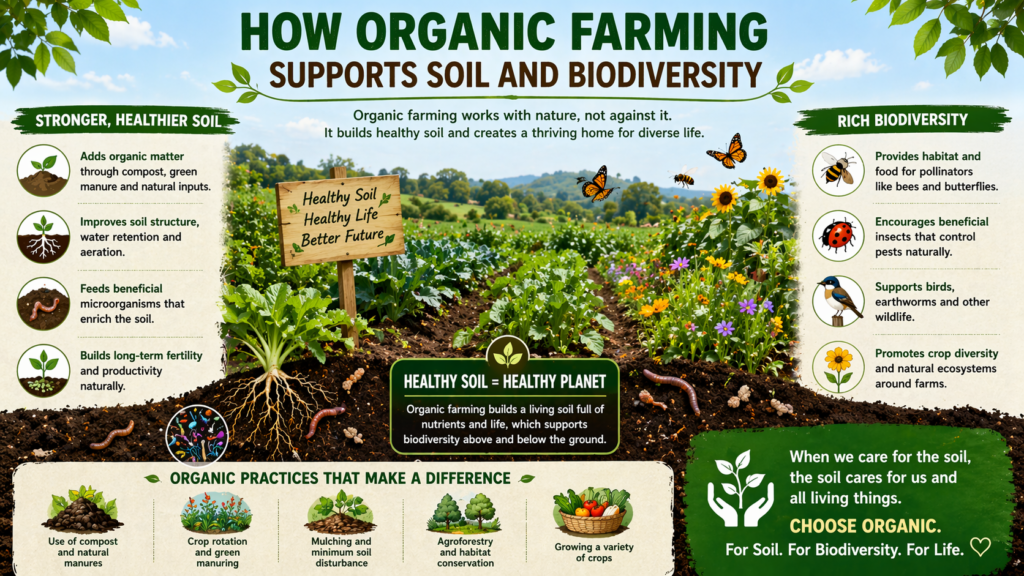
Healthy soil is full of life. It contains microorganisms, earthworms, fungi, minerals, organic matter, air, and water. Together, these elements create the foundation for strong plant growth.
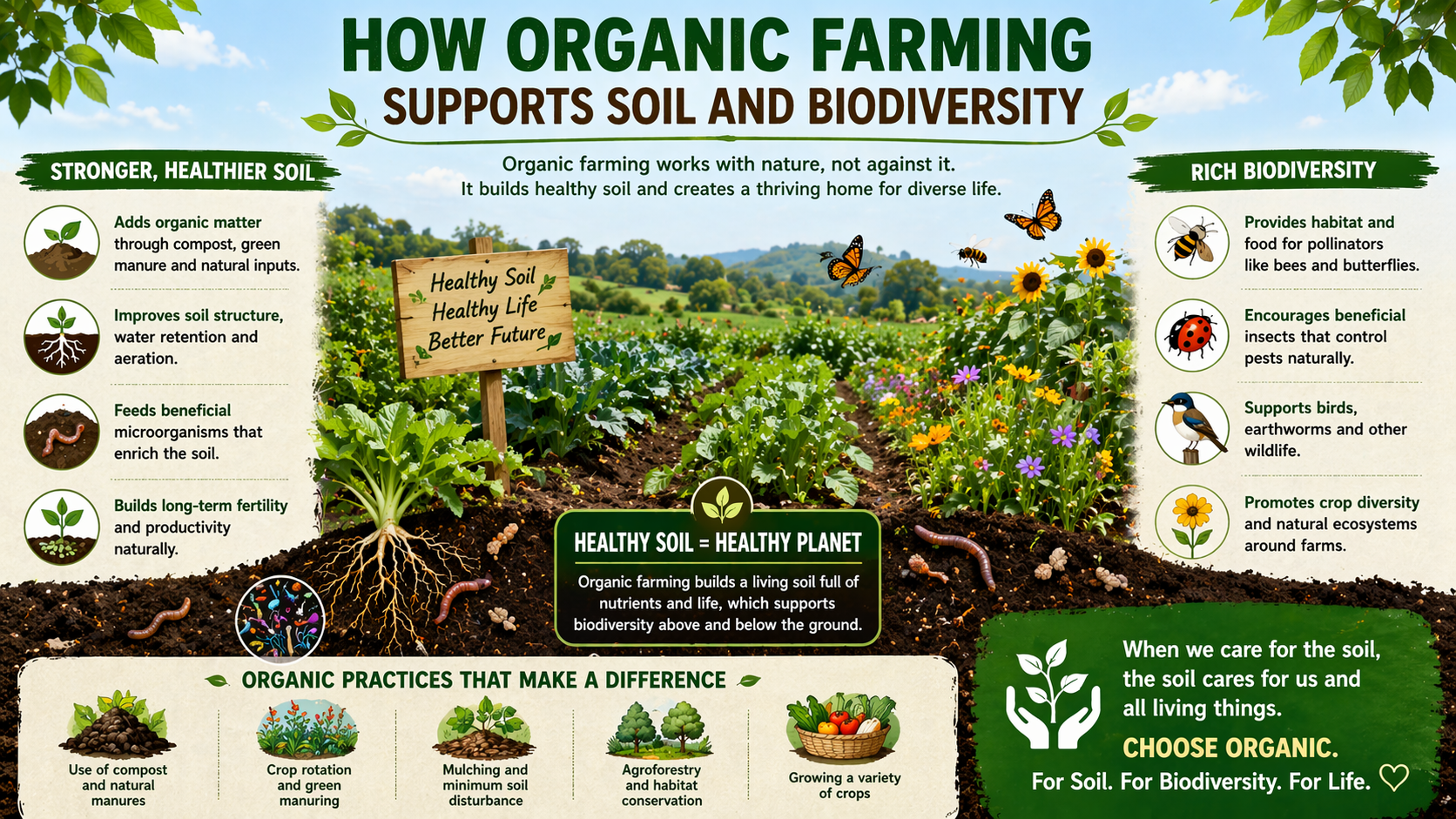
Organic farming helps protect this living system by avoiding heavy reliance on synthetic fertilizers and harsh chemical inputs. Instead, it focuses on building fertility naturally through compost, crop rotation, green manure, mulch, and other soil-friendly practices.
This matters because soil that is constantly pushed with chemical shortcuts can lose structure and long-term resilience. Organic methods aim to feed the soil, not just the crop.
How organic farming improves soil health
One of the biggest strengths of organic farming is that it encourages the soil to regenerate over time.
Crop rotation helps prevent nutrient depletion by changing what is grown in a field from season to season. Different crops use and return different nutrients, which helps maintain balance.
Compost and organic matter add carbon and nutrients back into the soil. This improves texture, water retention, and microbial activity.
Cover crops protect the soil from erosion, reduce weed growth, and add more life back into the ground when they are turned in or mulched.
All of this creates soil that is richer, more stable, and better able to support healthy plants without becoming dependent on constant chemical correction.
Why healthy soil matters for food
When soil is alive and balanced, crops tend to grow in a more natural way. Roots can spread more effectively, water is retained better, and nutrients are made available through biological activity.
That does not just help the farm. It supports the quality and consistency of the food itself. Strong soil leads to stronger growing conditions, which is one reason organic farming is often associated with more thoughtful, sustainable food production.
In other words, soil health is not an invisible detail. It is the starting point of better farming.
Biodiversity keeps farms resilient
Biodiversity means variety in living systems. On a farm, that includes insects, birds, soil organisms, plants, and other wildlife that all play different roles in keeping the ecosystem in balance.
Organic farms generally support more biodiversity because they reduce the use of chemicals that can harm non-target species. When the farm environment is less chemically intensive, beneficial insects, pollinators, and soil organisms have a better chance to thrive.
This matters because biodiversity helps farms function more naturally. Pollinators support crop reproduction. Predatory insects help control pests. Soil microbes break down organic material and release nutrients. A diverse ecosystem is more stable and more self-regulating.
Pollinators benefit from organic systems
Bees and other pollinators are essential to agriculture. Many fruits, vegetables, oilseeds, and flowering crops depend on them.
Organic farming often provides a safer environment for pollinators because it avoids many of the chemical pressures found in conventional systems. By supporting flowering plants, hedgerows, and more diverse field surroundings, organic farms can become better habitats for bees and other beneficial species.
This is especially important because pollinators are not just nice to have. They are central to food production and ecosystem health.
Fewer chemicals, more ecological balance
Organic farming does not mean a complete absence of pest control. It means choosing methods that are less disruptive to the ecosystem.
Rather than relying on broad chemical sprays, organic growers often use integrated approaches such as beneficial insects, companion planting, physical barriers, and timing-based management. These methods are designed to control problems without damaging the wider environment.
That difference matters. When a farm protects its natural balance, it creates space for more species to survive and coexist.
Long-term benefits for the land
One of the most important strengths of organic farming is that it thinks long term.
Healthy soil does not happen overnight, and biodiversity cannot be rebuilt instantly. Organic systems invest in the future by protecting the life already present in the land and encouraging it to grow stronger over time.
That can mean better water retention, reduced erosion, improved resilience during drought or heavy rain, and a more stable habitat for plants and wildlife.
A farm that supports soil and biodiversity is not only producing food for today. It is preserving the resources needed for tomorrow.
Why this matters to consumers
For people choosing organic products, the benefits go beyond personal preference. Every organic purchase supports a farming model that values soil life, ecological balance, and natural resilience.
That makes organic food part of a bigger picture. It is not just about what is on the shelf. It is about how the land was treated, how the ecosystem was preserved, and what kind of agriculture is being supported.
Organic farming supports soil and biodiversity because it treats the farm as a living system. It builds fertility naturally, protects beneficial organisms, reduces chemical disruption, and encourages a healthier balance between crops and the environment.
In the long run, that means stronger soil, richer ecosystems, and a more sustainable way of growing food.
For brands like Viand, this message fits naturally: better food begins with better farming.